I went to a steakhouse for my birthday two years ago, and I am still telling people about it. If you run a business, that sentence should stop you in your tracks, because the entire game is getting someone to talk about you when you are nowhere in the room.
This post breaks down the five customer experience design principles behind that night, why intentional experiences beat expensive ones, and how to lift each principle straight into your own business, whether you run a restaurant or a fully remote service business.
What's the difference between a satisfied client and a raving fan?
The difference between a satisfied client and a raving fan is almost never talent, quality, or budget. It comes down to intentionality: whether you designed the experience on purpose or simply delivered a competent service and stopped there. Satisfied clients got what they paid for. Raving clients felt something worth repeating.
Satisfied is quiet. It renews, it leaves a polite thank you, and it does not travel. Raving is loud in the best way: it refers, it reviews without being asked, and it brings you up at dinner parties. The gap between those two outcomes is designed, not accidental, and the good news is that it is available to any founder willing to make a few deliberate decisions.
The steakhouse that turned a birthday into a two-year referral
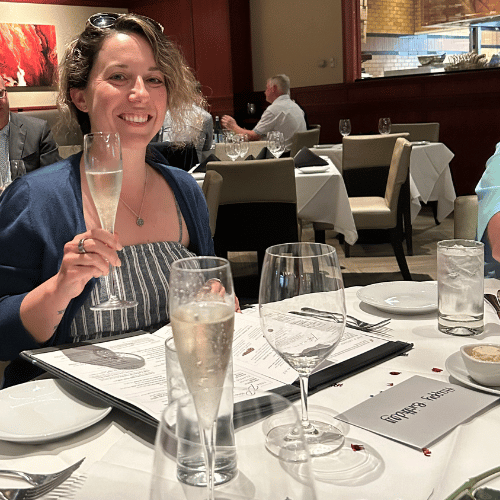
The place was Fleming’s Prime Steakhouse in Naples, Florida, and my expectations walking in were modest, which is to say I wanted a good steak. I am a person who reads the menu in advance so I can pick my dessert and reverse engineer the rest of the meal around it, so I arrived prepared for dinner. What I was not prepared for was a main character birthday experience.
The host walked us to a table already scattered with birthday confetti, and if you know me, you know confetti is a direct hit. At my seat there was a rose and a silver envelope holding a card signed by the entire staff. The server arrived with a round of complimentary sparkling wine, and a little later reappeared with an analog Polaroid camera, posed us, and came back ten minutes on with the photo already tucked into a frame. So within the first fifteen minutes I had confetti, a rose, a signed card, and a framed photograph, and at the end of the night a dessert arrived with “Happy Birthday, Nikki” written across it in chocolate.
Here is the part that matters: none of it was expensive. The confetti was preset (I could see it on every celebrating table in the room, which doubles as a quiet signal to the staff that this table is special). The rose was almost certainly part of a bulk order, the card was pre-signed, the Polaroid takes two seconds, and comping a glass of sparkling wine is a button somebody pushes. Each gesture on its own is pleasant and completely forgettable. What made the night land is that all of them were layered together on purpose, because a stack of pleasant gestures assembled with intention stops being a stack and becomes a feeling.
The moment that turned a nice night into the story I can't stop telling
Later that year my dad went back for his own birthday, except nobody had flagged the occasion, so a couple of hours before the reservation I called the restaurant. I happened to know from a previous visit that my dad, an espresso martini connoisseur of the highest order, considered theirs one of the best he had ever had. I asked if they could bring him one when he sat down, on me, with a little note, and they said of course.
I then waited on tenterhooks the way you wait for a text back from a crush. When it came, it was a photo from my mom of the empty martini glass in the foreground and my dad in the background, and the message said he had teared up when they told him his daughter had ordered it.
That tearing-up moment is what we are actually chasing when we talk about customer experience, and it is worth being clear that this is not the soft, fluffy end of the business: feeling is precisely the thing the experience exists to produce.
What are the 5 customer experience design principles?
The five customer experience design principles are capture the flag, design the arrival, layer the moments, build for human recovery, and earn the after. Together they explain why some businesses generate word of mouth at scale while equally talented competitors generate only politeness. Fleming’s happened to hit all five, and none of them require a dining room or a big budget.
Here they are at a glance:
- Capture the flag: collect the information that lets you do something remarkable.
- Design the arrival: the first moment after “yes” sets the emotional register for everything after it.
- Layer the moments: the memory comes from accumulation, not one signature gesture.
- Build for human recovery: the best moments come from a person paying attention, not a script.
- Earn the after: the relationship does not end when the invoice is paid.
1. Capture the flag
Fleming’s could not have delivered a birthday if they did not know it was a birthday, which sounds too obvious to say out loud, and yet most businesses have no mechanism for capturing the piece of information that would let them do something remarkable, so they default to delivering the service and stopping there.
The question for you is where that flag lives, and it does not have to be a birthday. Look at your intake, your booking flow, and your onboarding for the genuinely human question, the “what is this really for” or “is there anything we should know going in” that hands you the raw material for a surprise later. You cannot delight someone with information you never thought to collect.
2. Design the arrival
From the moment the host had my table flagged and preset, the message was unmistakable: they were ready for me. That is a categorically different feeling than walking in and watching someone glance up from a screen to ask whether you have a reservation.
Arrival works the same way whether it is a physical room, a welcome email, or a kickoff call, and it tells your client what kind of story they have just walked into. Ask yourself what the very first thing your client receives after they say yes actually feels like:
Is it warm, or is it transactional?
Is it specific to them, or a template with their first name dropped in?
Does it quietly confirm they were right to trust you with their time and money?
3. Layer the moments
What made the night was the accumulation, not any single gesture. Most businesses design one signature touch (a welcome gift, a nice kickoff, a “how did we do” survey) and stop there, when the clients who turn into evangelists are almost always responding to a sequence rather than a solitary highlight.
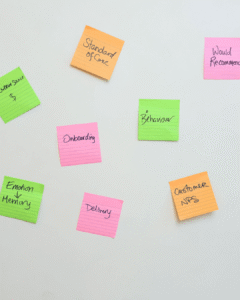
If you map your experience from yes to done, you will find natural touch points along the way, and most businesses light up only two of them:
Intake
Kickoff
Midpoint
Delivery
The close
The after
The whole opportunity lives in the ones you leave dark, filled not with grand gestures but with small consistent signals that say we see you, we thought about you, we did not forget about you.
4. Build for human recovery
The espresso martini is the most powerful part of the whole story precisely because it did not come from a system. Nobody was prepared for it; it happened because a human being paid attention, stored a detail, and acted on it later, which is what happens when your team understands why the experience matters and not merely what the steps are.
When someone on your team hears a throwaway line, the “I’m nervous about this presentation” or “we’re away next week for our anniversary,” and either flags it to you or acts on it before the client has to ask, that is where loyalty gets made. It is a culture question far more than a systems one, which is inconvenient, because culture is one of the harder things to build and one of the most valuable things to have.
5. Earn the after
I am proof of this principle, because I am still talking about this restaurant two years later on the internet. Most businesses treat the end of the engagement as the end of the relationship: the thing is delivered, the invoice is paid, everyone moves on.
The after is a discipline. It is what you do at thirty, sixty, ninety days and beyond that decides whether a client files you away as “good” in their mental Rolodex or actually brings you up at a dinner party. It does not have to be a pitch; a check-in, a relevant resource, or a plain “I saw this and thought of you” all signal that they did not vanish from your awareness the second the work was done.
Key Takeaways
- The gap between a satisfied client and a raving one is intentionality, not budget or talent.
- Small, inexpensive gestures layered on purpose create a feeling, and a feeling creates a memory worth sharing.
- Capture the information that lets you personalize, then design the arrival so the first moment after “yes” confirms the client’s decision.
- Spread deliberate touch points across the whole journey instead of loading everything into intake and delivery.
- The moments people remember most often come from a person who cared enough to act, which makes experience a culture project as much as a systems one.